Stay Lucky: A Playful Display Font for Creative Projects
Stay Lucky for Children's Product Packaging and Festive Branding
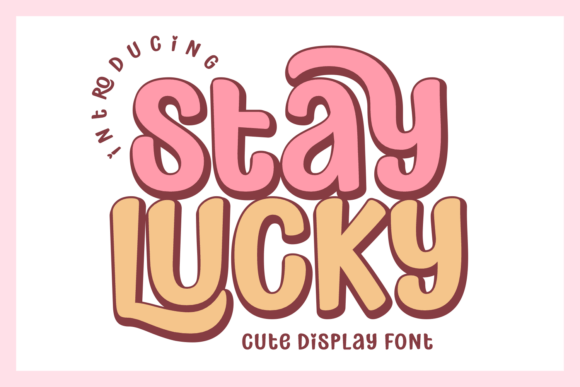
When I first encountered Stay Lucky, I was immediately drawn to its playful and inviting character. As a display font, it carries a warmth that feels especially suited for projects targeting younger audiences or those with a whimsical tone. I tested it on a children’s product packaging mockup, and the results were striking. The font’s rounded edges and cheerful rhythm made the design feel approachable and engaging—perfect for a toy line or a colorful kids’ magazine.
Stay Lucky isn’t just a font; it’s a mood. Its curves and gentle ascenders give it an organic, handcrafted feel, which is ideal for creating a sense of joy and spontaneity in editorial layouts. When paired with soft pastel colors and playful illustrations, it elevates the visual storytelling without overwhelming the reader.
Stay Lucky for Birthday Invitations and Social Media Graphics
I recently used Stay Lucky for a birthday invitation layout for a client’s digital newsletter. The font’s lively energy helped set the celebratory tone, making the text feel like part of the party itself. It worked exceptionally well as the main title, while a clean sans-serif font handled the body copy, ensuring readability wasn’t compromised.
For social media graphics, where attention spans are short and visuals need to pop, Stay Lucky proved to be a great choice. It added personality to headlines and captions, encouraging engagement without being too over-the-top. The font’s versatility shone through in this context—it could easily transition from a whimsical post about a child’s birthday to a fun announcement about a new product launch.
Stay Lucky for Lifestyle Blogs and Editorial Features
In a lifestyle blog redesign project, I experimented with using Stay Lucky for article titles and pull quotes. The result was a refreshing contrast to the more traditional serif fonts used elsewhere in the layout. It gave the content a modern, friendly vibe that resonated with the blog’s target audience—parents, creatives, and lifestyle enthusiasts.
However, it’s important to note that Stay Lucky may not be suitable for long-form reading or dense paragraphs. Its expressive nature makes it better suited for headlines, section openers, and decorative accents rather than body text. For such cases, pairing it with a readable serif or sans-serif font ensures a balanced and accessible layout.
One thing I noticed during testing was how well Stay Lucky complemented other display fonts in a multi-font hierarchy. It didn’t clash but instead added depth and visual interest to the overall design. This flexibility makes it a valuable asset for any editorial designer looking to enhance their publication’s identity without sacrificing clarity.
Stay Lucky for Print and Digital Publications
Whether used in print or digital formats, Stay Lucky maintains a consistent level of quality and legibility. In a recent printable planner project, I found that the font rendered beautifully in PDF exports, maintaining its charm even at smaller sizes. On mobile screens, it scaled well without losing its character, making it a reliable choice for responsive web design.
For publications that require multilingual support, I recommend checking if Stay Lucky includes extended language sets. While it seems to cater well to English-based projects, knowing its full range of glyphs and ligatures can help avoid potential issues when designing for international audiences.
As a designer, I always consider licensing when choosing a font for commercial use. Since Stay Lucky is available as a premium Display Font, it should come with clear commercial rights. Always confirm the license terms before incorporating it into paid products, templates, or client deliverables.
Stay Lucky for Brand Identity and Content Structure
Finally, I found that Stay Lucky contributes significantly to brand identity when used consistently across different touchpoints. Whether it’s a wedding guide, a coaching workbook, or a digital magazine, the font helps establish a cohesive look and feel that aligns with the publication’s voice and purpose.
Its ability to support visual hierarchy and reader attention is one of its strongest points. Used strategically in headers, pull quotes, and chapter openers, it guides the reader through the content in a way that feels intuitive and engaging. This makes it an excellent choice for creators who want to build a strong editorial presence without relying solely on imagery or color.