Sorry Mister: The Display Font That Elevates Campaigns
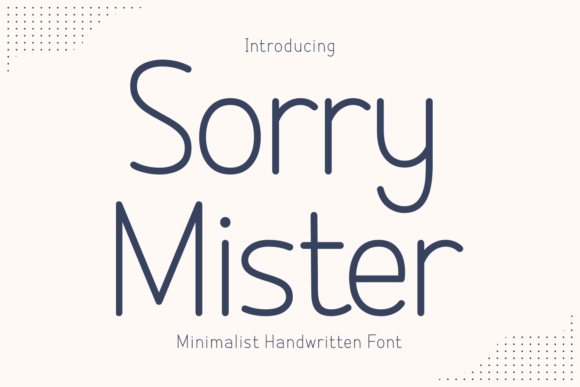
It was 8:47 AM, and I was staring at my screen, trying to finalize the launch graphic for a new product line. The client wanted something clean, modern, and approachable — nothing too flashy, but enough to grab attention on social feeds. I had tried several fonts, but none quite landed. Then I opened up Sorry Mister, a display font that exudes minimalism and simplicity in all its glory. The moment I saw it, I knew I had found the right voice for this campaign.
Sorry Mister for Product Launches and Brand Messaging
Sorry Mister is more than just a display font — it’s a strategic choice for campaigns that need clarity and charm. Its playful yet clean aesthetics made it perfect for the product launch I was working on. I used it for the headline of the landing page banner, and the result was immediate: the message felt more approachable, and the brand identity became instantly recognizable.
When designing for product launches, the first impression matters. Sorry Mister helped me achieve that with ease. It works especially well for short headlines, callouts, and promotional labels. I paired it with a clean sans serif font for body text, which created a balanced visual hierarchy without overwhelming the viewer.
Sorry Mister for Instagram Posts and Social Media Graphics
Later that afternoon, I moved on to creating a series of Instagram posts for the same product line. Each post needed a unique look but still had to align with the brand’s tone. I leaned into Sorry Mister again, using it for captions, quote graphics, and even as part of the image overlays.
One of the key benefits of Sorry Mister is how well it performs on mobile screens. Even when scaled down for thumbnails or story covers, the letterforms stayed legible and retained their charm. This made it ideal for fast-scrolling feeds where first impressions are everything.
I also experimented with different color palettes against light and dark backgrounds. The font’s subtle curves and consistent stroke weights made it adaptable — whether I was using it on white space or a bold gradient backdrop, it always looked intentional.
Sorry Mister for YouTube Thumbnails and Video Content
Next came the YouTube thumbnail set. The challenge here was to create something eye-catching while keeping the brand’s voice consistent. I used Sorry Mister for the title text, pairing it with a contrasting background to ensure readability from a distance.
The font’s versatility allowed me to use it across multiple video concepts — from a teaser clip to a full-length tutorial. It worked equally well for decorative titles and supporting typography, helping to maintain a cohesive look throughout the content series.
For those who design for video platforms, knowing how your typeface will appear in small previews is crucial. Sorry Mister performed exceptionally well in this regard, maintaining its character even when reduced in size.
Sorry Mister for Email Banners and Digital Ads
Email marketing requires a font that can be both engaging and professional. I tested Sorry Mister in an email banner for the product launch, and it stood out immediately. The font’s clean lines and friendly feel made the CTA (“Shop Now”) feel inviting rather than pushy.
In digital ads, Sorry Mister helped reinforce the brand’s personality without being distracting. I used it in a few ad variations — one with a bright background and another with a muted palette — and both versions resonated well with the target audience.
One thing I noticed was how Sorry Mister could influence message clarity. The font didn’t compete with the visuals; instead, it complemented them, making the overall design feel more intentional and focused.
Sorry Mister for Webinar Promotions and Course Launches
As I prepared for a webinar promotion, I realized that Sorry Mister could be the perfect fit for the event’s branding. I used it for the main headline on the registration page and in the promotional email subject line. The font’s minimalism gave the event a polished yet friendly vibe.
For course launches, the font’s ability to convey both professionalism and approachability was a huge plus. I used it in a series of promotional banners and landing pages, and each time, it helped establish a clear connection between the content and the audience.
What stood out was how Sorry Mister could be used creatively across different formats — from large headers to small callout boxes — without losing its core identity.
Sorry Mister for Online Shop Campaigns and Branded Templates
Finally, I integrated Sorry Mister into the online shop campaign. From product category headers to promotional banners, the font added a layer of consistency and charm that elevated the entire shopping experience.
I also created a set of branded templates using Sorry Mister for future campaigns. These included social media carousels, email headers, and even print materials. The font’s adaptability made it easy to repurpose across different channels, ensuring a unified brand presence.
Before finalizing any template, I made sure to check the font’s file formats, multilingual support, and commercial licensing. For campaigns that require extensive use, like digital ads or merchandise, having a font with proper licensing is essential.
Overall, Sorry Mister proved to be a reliable and versatile tool in my design workflow. Whether I was working on a product launch, social media content, or digital ads, it consistently delivered the clarity and charm needed to make the message stand out.